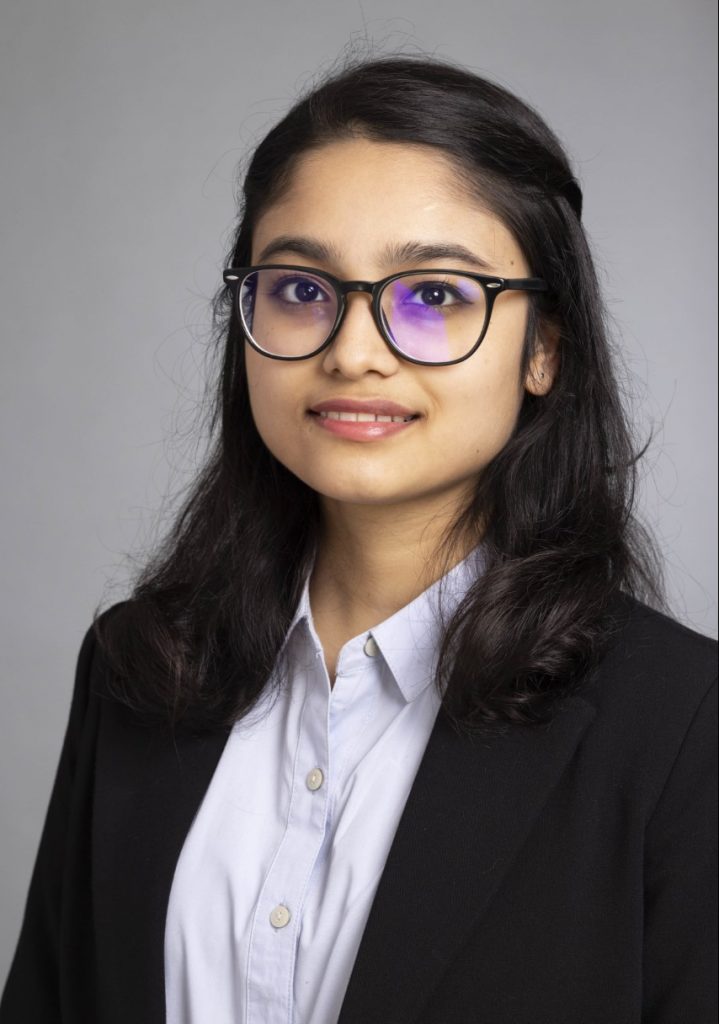
Divya is a PhD candidate in management affiliated with IESEG School of Management, University of Lille and the Lille Economics and Management (LEM) laboratory. Divya’s doctoral thesis focuses on sustainability and the role of the finance function in organizations. Particularly, her projects focus on the role of the Chief Financial Officer (CFO) in sustainability and the interactions between sustainability and finance using diverse methodologies.
Here is Divya’s story.
What are the top three highlights, professional skills, or other experiences you have had during your time as a PhD student?
- People management and communication: In the PhD, I continue to come across very different people and accordingly, personalities. It is the most enriching part of my PhD – understanding how different people work and connecting with them in different ways. Thanks to the nature of my research and my empirical focus, I have had the opportunity to interact with professionals both from the industry and academia – from CFOs, managers, employees in the industry to PhDs, post docs, professors and admin staff in academia. With each conversation I have had in conferences, premises of my school and interviews, I learn. I have learnt how people think, how people act and react, what is similar to my culture and what is not, and what makes each person unique. It has been an ongoing learning experience, and I cherish this part of my work very much and it drives me forward.
- Organizing the first edition of the PhD Research Day at IESEG School of Management: Being in a business school, I have colleagues who are PhD students in an array of domains – Finance, Marketing, Operations, Human resources, you name it and I am sure to have a colleague in that field. We also have a great set of Professors in each of these domains and department, and I wanted to take advantage of this very rich learning environment. Together with a PhD colleague, we organized the first edition of the PhD Research Day at IESEG where we had PhD students, from different fields, at different stages of their project, present their work and Professors specialized in the field of the student acted as a discussant. We also organized two panel sessions that brought academics and industry specialists together to discuss career opportunities after the PhD. This event turned out to be very successful in that it truly brought the PhD community and the Professors together at IESEG and it is definitely one of the highlights of my PhD journey.
- Tackling feedback: In the first year of my PhD, I would go to conferences, meet new scholars and end up with tons of feedback. I was lost and I found it hard to aggregate them. I took all feedback at face value and would worry about how to address each suggestion I receive. It was overwhelming. Over the PhD and after several discussions with my supervisors and other colleagues, I realised one of the most important skill to have is to tackle feedback. I stopped looking at feedback at face value and started to separate what makes practical sense to a certain work at its given stage, what can wait or be thought about at a later stage and what does not need more of my attention. This process was rather challenging and it is something that I still struggle with. But I would say I have now made a lot of progress handling feedback than I used to and this has truly helped me make some progress with my work.
What inspired you to pursue a PhD?
Firstly, after graduating from my master’s, I wanted to move into industry and set myself the target of paving a path towards becoming a CFO of a FMCG (Fast-Moving Consumer Goods) company. It was in the first year of my master’s in financial management and control at IESEG that I followed the nonfinancial reporting course with my supervisor Prof. Lies Bouten. It was a course that truly sparked my curiosity, and I wanted to do my master thesis under her supervision, and this is the time I was offered the opportunity of doing a PhD.
Secondly, my family is full of academics. As a woman coming from India, I was constantly nurtured with the idea that education is the most powerful tool that I can use to advance myself. Following the footsteps of my uncle, who is currently a professor working in Malaysia and the only PhD holder of my family, influenced my desire to pursue this opportunity.
How would you summarize your research project(s) in a short title?
Integrating sustainability: Research on the role of the CFO and the finance function.
In brief, what is the empirical method/context you are adopting in your thesis?
I have three articles as part of my PhD project mobilizing three different qualitative methodologies. For the first article I use publications (articles, reports, blogs, etc.) by Big Four professional service firms in framing sustainability-related expectations for the CFO role. The second article uses semi-structured interviews with CFOs to understand how they make sense of sustainability for their role. As for the third study, I am currently conducting a field work of four months to understand how finance and sustainability functions interact through a single-case study.
Can you describe a “eureka moment” you might have had during your PhD?
I think of my PhD as a process. It is really a process where I am challenged to learn, unlearn and relearn on a nearly daily basis. I try to enjoy this process as much as possible despite the ups and downs that it may present. So simply put – I don’t think I had a single eureka moment in my PhD but rather multiple ones. Even ones that I thought were eureka moments but that were indeed, not. And that’s okay, it happens too 🙂
What side projects, communities, or other initiatives are you involved with?
I continue to do teaching activities at my school and have facilitated courses on cost accounting for bachelor students and nonfinancial reporting for master students. For the coming year, I have a new course on management control and governance which I am looking forward to teaching. During the initial stages of my PhD, I was part of a Toastmasters Club for public speaking called Sustainable Speakers where I spoke about various sustainability topics and connected with different sustainability professionals. I was also a council member in the laboratory council over the past year, contributing to the doctoral community. Currently, I have taken a step back from these roles as I move towards the final stages of my PhD.
What three tips would you offer to new PhD students in your field?
- Be ready to be challenged: Even though I could speak English fluently I could not understand the first sentence that I would read in an article. It was disheartening. But it wasn’t a matter of language, it is a matter of experience. Do not be discouraged that you cannot understand what is written in academic articles in the first few weeks or even months of the PhD because it is completely normal. I slowly started making my portfolio of what I know and started to build it brick by brick. Even then, I would hear something that I would not understand but at least it had evolved from being a point of frustration towards an intellectual curiosity. If you do not understand something, just look it up or ask someone. There is no expectation that you should already know everything – in fact, the very essence of academia is built on not knowing and trying to bring clarity around unfamiliar phenomena or concepts. Every researcher, no matter how experienced, is in the process of understanding something they do not know, so it is universal. What distinguishes good scholars is not what they already know, but their willingness to engage with what they do not understand, to ask questions and remain open to learning.
- Enjoy the process: I think the PhD is challenging. It is surely challenging for me and all the people I have met who have completed or are currently pursuing their PhD. More than the intellectual challenges involved, there are a lot of physical and mental constraints such as, for international students like me, being far away from your family, the ‘imposter syndrome’, lack of data, misunderstanding and miscommunication with people, different ideas and interpretations. It’s an overwhelming, endless list. But at some point, everything starts falling together. Seeing the big picture is scary but looking at it as a process is more reassuring and makes it manageable. Most importantly, your PhD is yours and yours only.
- Balance is key: It is true that PhD can be consuming – of time, energy and beyond. But it is definitely important to value personal care during this time such as eating well, sleeping well, talking to loved ones and moving on with your personal life. PhD is only a part of your life. I try to remind myself of this often at times when it can get extremely challenging.
What hobbies or interests do you enjoy outside of work?
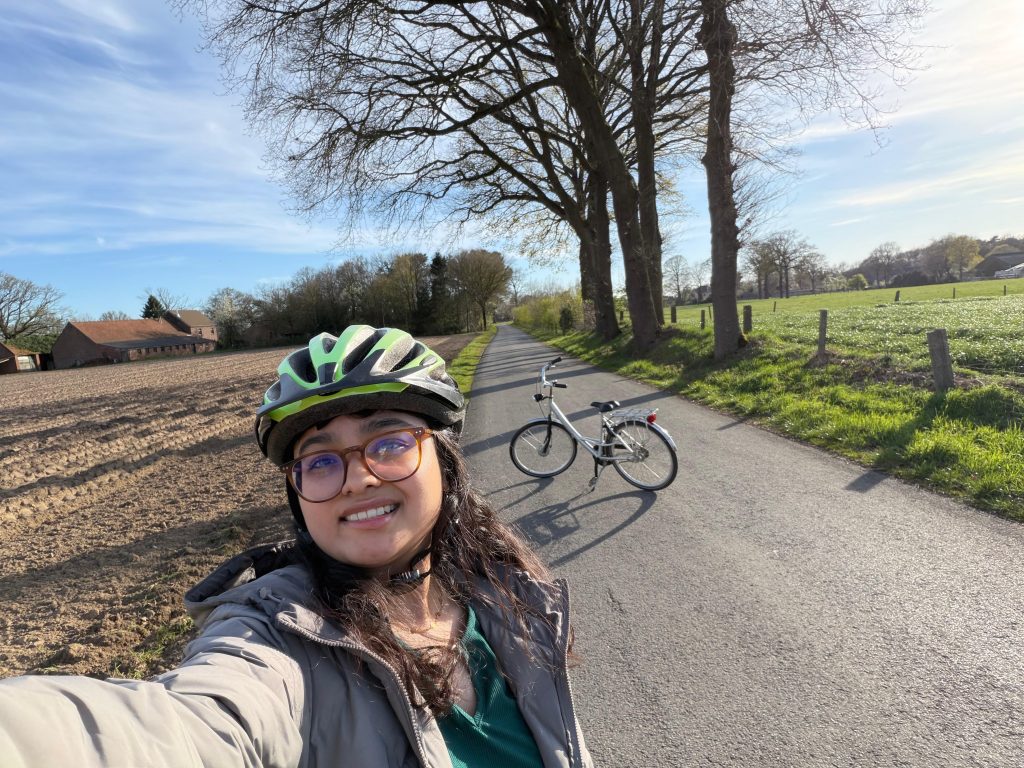
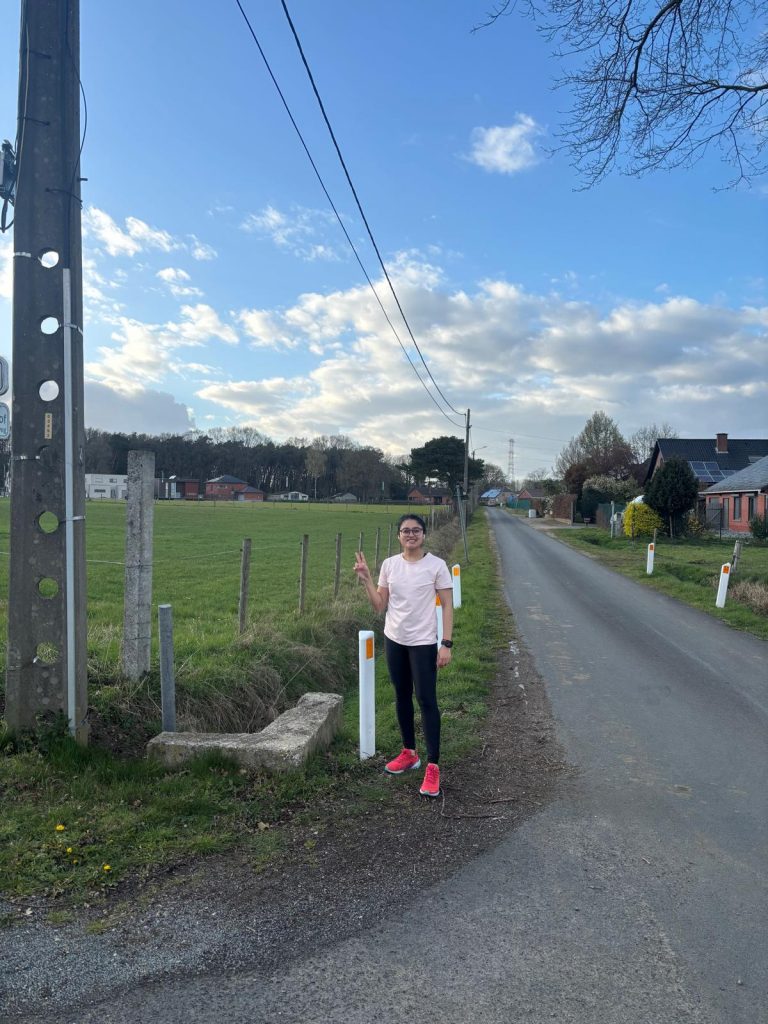
I enjoy a lot of things outside of my PhD. I take Hindustani (traditional music in India) singing lessons. I enjoy spending time with my PhD colleagues both on campus and outside work. I love video calling my family and spending time with them – showing them all the places I travel to, especially during conferences. I recently started to invest a lot of my time in sports and physical health. Therefore, I have been learning different activities, specifically running and biking, and I am in the journey of reconnecting with my body.
In one or two sentences, what does the GRONEN community mean to you? Or the community of sustainability management scholars more broadly if you are new to GRONEN.
GRONEN is the very first conference I have attended during my PhD journey. It really set the very positive tone that my PhD is grounded on. The connections I have made in GRONEN are still very much part of my current network and I cherish the relationship I have with them.
What’s next for you?
As I am reaching the more advanced stages of my PhD, my focus now is towards the completion path. I am currently preparing my first paper for submission, presenting my second paper in conferences and collecting data for the final project. In short, I am preparing myself for a charged year ahead – personally and professionally!
Contact
You can contact Divya by email or connect on LinkedIn.

Karelia Dagnaud is a doctoral candidate at the Aalto University School of Business, in Finland. In her research, she explores how researchers and business practitioners learn and organize for sustainability, specifically in the textile sector context.