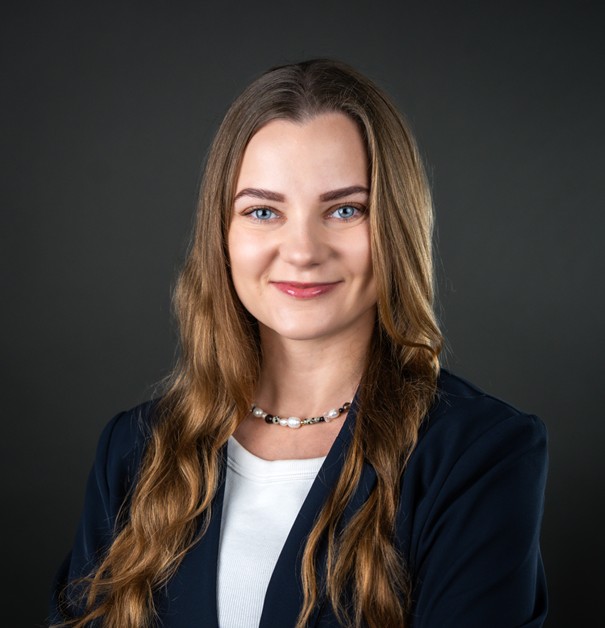
Margarita Oja da Silva is pursuing her PhD from Pablo de Olavide University in Seville, Spain. Her research examines how entrepreneurial organizing and strategic decision-making shift when AI agents become part of the entrepreneurial process. She is based in Portugal and works as a researcher at the Digital and Sustainable Innovation Lab (DSI-Lab) at Católica Lisbon School of Business & Economics.
Here is Margarita’s story.
What are the top three highlights, professional skills, or other experiences you have had during your time as a PhD student?
- Attending and presenting at international research conferences
One of the biggest highlights of my PhD journey has been the opportunity to attend and present at international research conferences. This has meant connecting with other scholars, presenting my work, and getting feedback, whether during formal presentations or over coffee breaks with someone who offers an interesting angle I had not considered before.
My first conference took me to Cape Town, South Africa, which was incredible not just because of the location, but because I met people from other regions who shared non-Western perspectives on research and beyond. As a first-year PhD student, that really widened my horizons.
More recently, I presented at the Academy of Management conference in Copenhagen and the SMS Special Conference in Palermo. Both were great opportunities to hear from top scholars in the field and learn about the latest developments in management research.
- Taking courses from different universities
The second highlight has been attending PhD courses from various universities. My program offers the flexibility to choose PhD-level courses, so I took a Philosophy of Science online course from the University of Oxford, which gave me a strong foundation in diverse philosophical perspectives.
I also had a chance to take part in a one-week intensive PhD course on case-study approaches to theory building at Copenhagen Business School, which gave me a solid foundation in the methodological rigor needed to publish high-quality research.
Most recently, I completed an online PhD course from the University of Amsterdam on AI ethics and decision-making, which provided valuable insights for the paper I’m currently working on and helped me understand different angles and nuances to the topic.
These experiences have exposed me to different teaching styles, content areas, and expertise while expanding my knowledge of rigorous research. I also like to think of these courses as getting a glimpse of what it would be like to study at these universities.
- Exchanging insights with visiting PhD students
The third experience I would like to highlight is exchanging insights with other PhD students. Since I’m doing my PhD remotely, I am not surrounded by fellow PhD students in my everyday work, which makes these interactions especially meaningful. At the DSI-Lab, we often host visiting PhD students from other universities, which has been a great way to share insights, struggles, and lessons with others who are further along in their journey. These exchanges are invaluable as they remind me that I am not alone in this and that the challenges that arise are completely normal.
What inspired you to pursue a PhD?
My inspiration to pursue a PhD is rooted in a curiosity to expand human knowledge. By this, I mean exploring new angles to describing phenomena and building on existing concepts to contribute fresh perspectives to the field. I got a glimpse of this when I started working at the DSI-Lab as a research assistant after my master’s studies. I quickly discovered that I loved it, so I thought, why not do a PhD?
I was also drawn to the flexibility that academia offers. Every day is different, and I value the autonomy to structure my schedule around my priorities and goals. This freedom comes with the responsibility of meeting deadlines, but as an organized Virgo, I have systems and structures in place that make this way of working well-suited to me.
How would you summarize your research project(s) in a short title?
Artificial intelligence in entrepreneurial ecosystems: Reshaping startup teams and ecosystems.
In brief, what is the empirical method/context you are adopting in your thesis?
My empirical research is grounded in qualitative methods. As the dissertation examines AI agents in entrepreneurial organizing, which is an emerging phenomenon, I adopt an open-ended research design and employ inductive theory-building through multiple case studies. This approach allows me to understand the context within which decisions, beliefs, and actions unfold.
Given my focus on the implementation of AI practices, I purposefully select cases where this phenomenon is most likely to occur. As a result, my empirical work primarily examines AI startups, which offer rich settings for studying how AI agents are integrated into organizing processes.
My data collection is based on semi-structured interviews with founders and key stakeholders across the entrepreneurial ecosystem. This format allows for in-depth, context-specific insights while keeping the discussion aligned with the research questions. Across all studies, interview data is complemented with secondary sources, including company websites, product materials, and publicly available reports.
Can you describe a “eureka moment” you might have had during your PhD?
I believe that eureka moments often come from doing hard things. While working on my articles, I have repeatedly encountered intellectually demanding moments where I felt stuck and unsure how to move forward. For me, these situations typically arise when I am developing conceptual frameworks, interpreting findings, or clarifying how my work contributes to the broader knowledge domain.
For me, breakthroughs rarely happen while staring at the page. Instead, they tend to come after I step away: during a walk, a workout, a shower, or after a good night’s sleep. When I return to the problem mentally recharged, the path forward often suddenly becomes clear.
What side projects, communities, or other initiatives are you involved with?
- Gronen Communications Team
Since autumn 2025, I have been part of the GRONEN leadership team, contributing through the communications team. In this role, I am responsible for communications related to the upcoming GRONEN 2026 conference and lead the conference’s social media campaign. This has been a great way to engage with the community. In addition, I volunteered to contribute to the development of GRONEN’s strategic plan as part of a dedicated task force, allowing me to support the community’s long-term development.
- Digital and Sustainable Innovation Lab (DSI-Lab) EU Projects Lead
At the DSI-Lab, I serve as the project lead for two European research projects. One focuses on regional innovation ecosystems, while the other brings together interdisciplinary research on AI and biotechnology. Leading these projects has allowed me to engage beyond academic circles and collaborate with industry partners and ecosystem stakeholders.
- Católica Lisbon School of Business & Economics Activities
At Católica-Lisbon, I am involved in teaching-related activities, including co-designing and teaching an undergraduate course on Digital Strategy and Sustainability. This role has been a valuable opportunity to engage with the students as future leaders who have to make strategic decisions on digitalisation and sustainability. Additionally, I co-supervise master’s students, which allows me to further develop my mentoring skills while expanding my own research perspectives.
What three tips would you offer to new PhD students in your field?
- Choose your supervisors well
Your supervisors play a major role in shaping your PhD experience, making this an essential early decision. Working with scholars who are genuinely interested in and invested in your topic can make a huge difference. In my case, my supervisors are not only supervising to provide feedback, but also mentors who open doors, create opportunities, and encourage me to push beyond what I think is possible. Their care and attention to detail have been instrumental in shaping my PhD in a positive way.
- Refining your PhD topic takes time and iteration
Depending on your position, this advice may vary in relevance; some PhD projects are tightly embedded within larger research programs, while others allow more flexibility. In my case, I had considerable freedom to refine my topic based on my interests, relevance to the field, and connections to my prior research. Finding where I wanted to position my thesis and define my contribution required time, multiple iterations, and deep engagement with the literature. At times, it felt like little progress was being made, but I learned that slow progress is still progress.
- Know your “why” and break the process into manageable parts
A PhD can feel like a long journey, particularly when the end goal feels far away, which is why knowing your “why” and breaking the process into manageable parts is so important. During these periods, motivation can be hard to maintain, and having a clear sense of purpose helps provide direction when progress feels slow. To support this, I use a digital planner with a dedicated space for my purpose, which serves as a personal north star during more challenging phases.
I also strongly recommend breaking it down into smaller, achievable milestones. I typically set yearly goals across different areas and translate them into concrete action plans and weekly tasks. That said, the most important part is finding a system that works for you and knowing to seek support when motivation runs low.
What hobbies or interests do you enjoy outside of work?
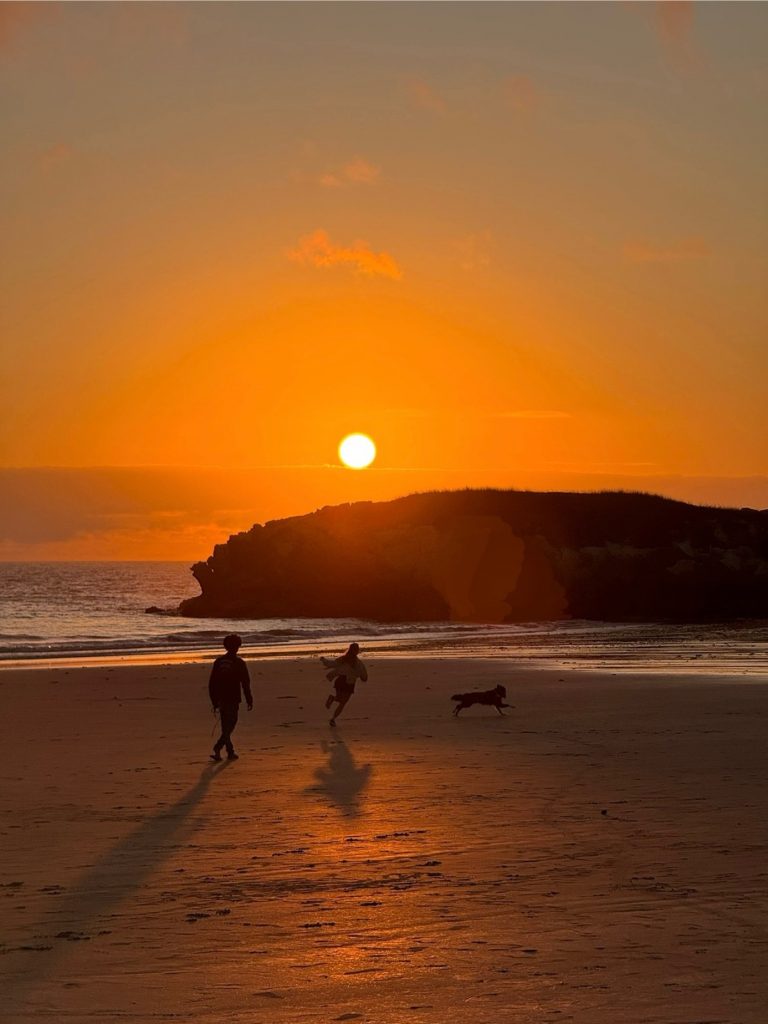
I live next to the ocean, so most weekends and sunny evenings you would find me at the beach chasing sunsets, surfing, running, playing with my dog, reading a good book, or chatting with friends.
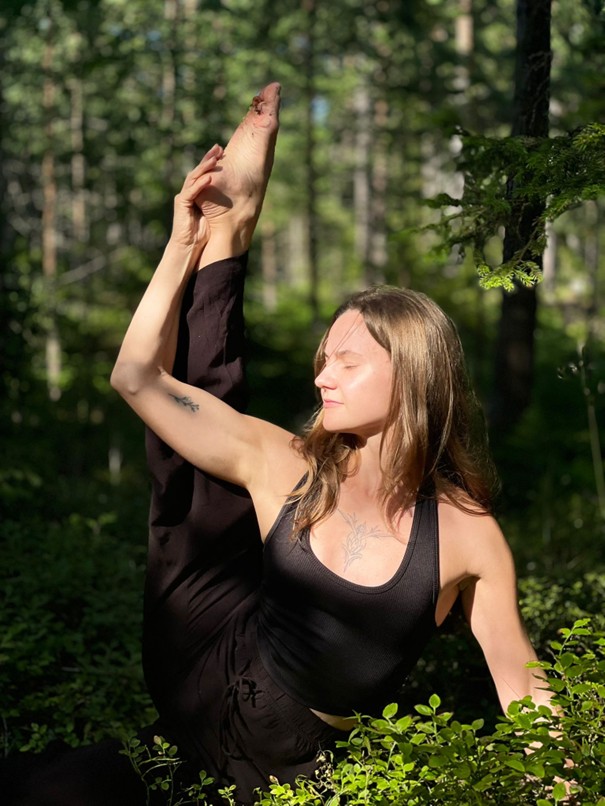
I have also been immersed in the world of dance from a young age, which naturally became my preferred art form. After exploring several styles, I fell in love with contemporary dance for its ability to express emotion through movement. I have had the opportunity to compete at both national and international levels and, more recently, to teach at a local dance studio. While dance is now a hobby rather than a professional pursuit, it remains an important creative form for me.
In one or two sentences, what does the GRONEN community mean to you? Or the community of sustainability management scholars more broadly if you are new to GRONEN.
Although my academic background is in sustainability studies, my move into a business school and management research initially led me somewhat away from sustainability-focused topics. Attending the GRONEN conference in 2024 and connecting with like-minded scholars brought back a sense of purpose I had not realized I was missing. The GRONEN community’s shared commitment to environmental and societal challenges has kept me close to the community ever since.
What’s next for you?
Working in academia, the future is rarely predictable. For now, my focus is on advancing and completing my PhD. Looking ahead, I would like to remain in academia and pursue a teaching-focused career track. However, I am also open to exploring positions in the industry for some time to get an outside perspective if the right opportunity comes up.
Contact
You can contact Margarita via email at margarita@dsi-lab.org or connect on LinkedIn.

Karelia Dagnaud is a doctoral candidate at the Aalto University School of Business, in Finland. In her research, she explores how researchers and business practitioners learn and organize for sustainability, specifically in the textile sector context.