Reflections by Ai-Peri Jumashaly
The second day of the Doctoral Consortium was one of the most valuable parts of my entire conference experience. We began with post-feedback circles, reflecting on the insights and suggestions we had received the day before. It was a great reminder that feedback is not only about improving a paper, but also about sharpening our thinking and developing as researchers.
The session on AI for PhD Research sparked some fascinating discussions. Beyond the practical possibilities, it raised important questions about the role AI should play in academic work, where human judgment remains irreplaceable and how we can embrace new technologies without losing the creativity and rigor that underpin good scholarship.
I also attended the parallel session on Navigating the Job Market in Times of Backlash, which was especially insightful. What I appreciated most was the honesty of the panel and the diversity of career paths represented. Rather than offering a single blueprint for success, the discussion highlighted the many ways an academic career can evolve, the realities of today’s job market and the importance of staying adaptable while remaining true to the questions that motivate our research.
Overall, the consortium provided something that can sometimes feel surprisingly rare in academia: openness. Hearing senior scholars speak candidly about the challenges, uncertainties, setbacks and opportunities they encountered along the way made the path ahead feel a little less intimidating and a lot more human.
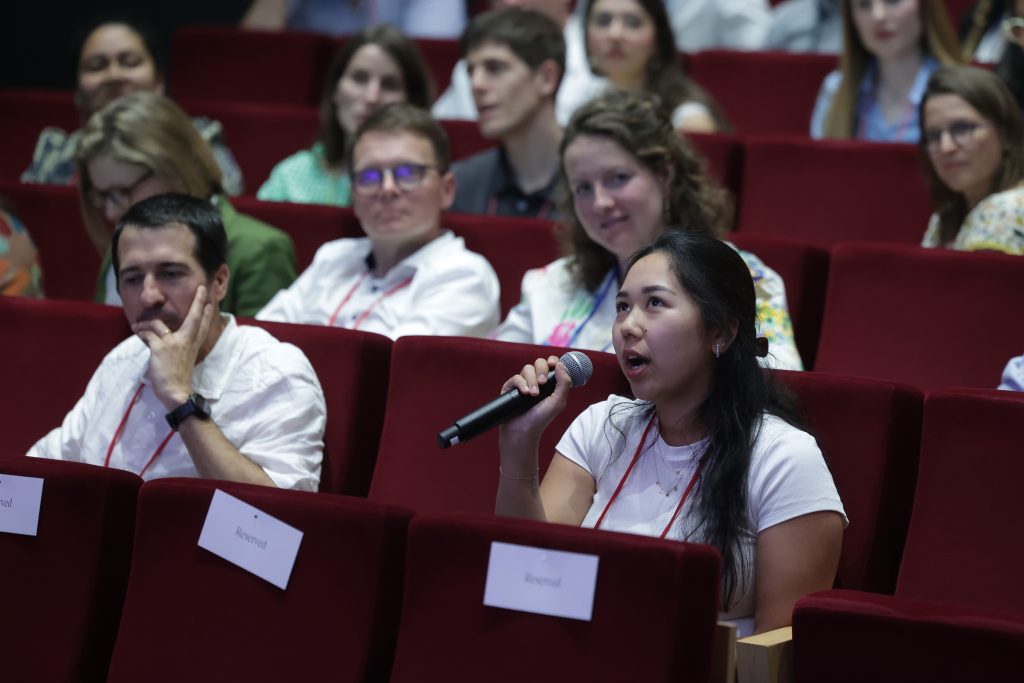
Beyond the consortium, a few conference sessions have stayed with me. One explored co-theorising with non-academics, highlighting how bringing missing and marginalised voices into research can make our work both more rigorous and more relevant. Another, led by Brooke Lahneman and colleagues, made a compelling case for why organisational research needs to engage more seriously with water as a critical sustainability challenge, opening up exciting avenues for future research.
And throughout the week, I was struck by GRONEN’s culture of generosity. Whether during presentations, feedback sessions, or coffee breaks, people consistently approached discussions with curiosity, kindness and a genuine desire to help others improve their work. Most of all, I’m leaving with gratitude for the wonderful doctoral consortium community. Spending time with fellow PhDs who are asking big questions, navigating similar challenges and supporting one another was both encouraging and energising. Academia can often feel solitary; spaces like this remind us that it doesn’t have to be.
Thank you to everyone who made GRONEN 2026 such a memorable experience. I left Barcelona with new ideas, new friendships and more motivation for the journey ahead! VAMOS!
Ai-Peri’s bio

Ai-Peri is a PhD candidate at the Centre for Sustainable Business (CSB) at King’s Business School. Prior to her doctoral studies, Ai-Peri worked with diverse stakeholders, ranging from international non-profits, public sector and private companies, which made her a strong advocate for collaboration for sustainability. These days, she is very curious about how companies protect, restore, or sustainably manage nature.

Margarita Oja da Silva is a PhD candidate at the Universidade Pablo de Olavide (UPO) and has a master’s
degree in Sustainable Development from Uppsala University, Sweden. Margarita’s primary research
interests at the Digital + Sustainable Innovation Lab include digital transformation technologies, particularly
AI, and its implications for entrepreneurial teams and ecosystems.