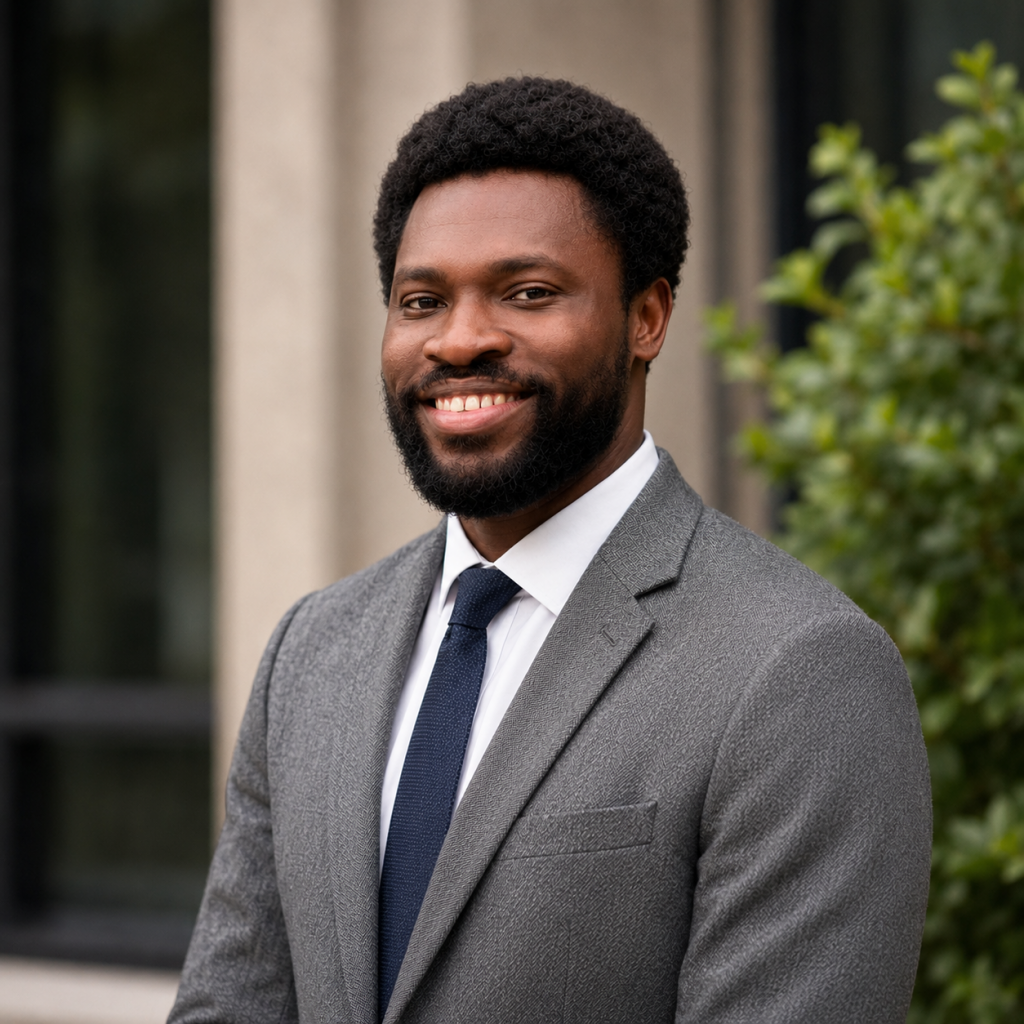
Patrick Oko Quaye recently completed his PhD in Management Studies at the University of Exeter in the United Kingdom. His research examines how biodiversity and nature enter organisational sensemaking processes, and how responsibilities for addressing ecological challenges emerge, evolve, and are shaped within organisational contexts. His work contributes to the literature on organisational sensemaking and includes peer-reviewed journal publications, including in the Journal of Management Inquiry.
Here is Patrick’s story.
What are the top three highlights, professional skills, or other experiences you have had during your time as a PhD student?
Three key highlights of my PhD journey include (1) developing methodological and interpersonal research skills through iterative fieldwork and interviewing practice, (2) active engagement with the academic community through conferences and workshops, and (3) building confidence and resilience through regular presentation and engagement with feedback.
- First, a significant highlight has been the development of qualitative interviewing skills through iterative fieldwork experience. Early in my PhD, I faced challenges in conducting effective interviews, which in some cases affected participant engagement. Through ongoing reflection and repeated practice, I refined my interviewing approach and developed greater confidence and sensitivity in engaging respondents. Over time, this became a recognised strength, with participants often providing positive feedback on the quality of my interviews. This progression from initial difficulty to growing competence has been one of the most formative aspects of my methodological development.
- Second, my PhD has been shaped by active engagement with the academic community through conferences and workshops, including the Academy of Management (AOM), EGOS, Journal of Management Studies (JMS) workshops, and Business & Society Research Workshops. These experiences have been instrumental in strengthening my theorising, sharpening my academic writing, and improving my ability to communicate research ideas. Importantly, they have enabled ongoing engagement with scholars in the organisation and natural environment field, including senior academics, whose feedback has been valuable in refining my work and shaping how I position it within broader scholarly conversations. More broadly, they have helped me situate my research within an active and evolving academic community.
- Third, from the early stages of my PhD, I regularly made use of opportunities to present my work in departmental seminars, faculty research forums, and internal workshops. I deliberately ensured I did not miss opportunities to share work-in-progress and receive feedback. While initially this required building confidence, over time it became an important part of my development as a researcher. It strengthened my ability to communicate ideas clearly, increased my confidence in presenting under scrutiny, and helped me develop greater resilience and openness in engaging with and incorporating feedback.
What inspired you to pursue a PhD?
I was born and raised on the southern coast of Ghana, just a few meters from the sea, so nature has always been an integral part of my lived experience. However, my awareness of the relationship between organisations and the natural environment became more pronounced after entering the corporate world following my bachelor’s degree, where I observed how organisations discharged effluents and partially treated wastewater into water bodies. This experience made me reflect more deeply on how organisational activity shapes, and often disrupts, natural systems, and how managers might approach these relationships differently.
This growing interest led me to pursue a master’s degree, where I examined the impact of green innovation on organisational performance in my thesis. This work further deepened my interest in how businesses and their leaders engage with environmental concerns in practice, and how more responsible forms of organising might emerge.
My motivation for pursuing a PhD therefore stems from a combination of a lived connection to coastal ecosystems and an academic curiosity about how organisations can move toward more responsible and less harmful relationships with the natural environment.
How would you summarize your research project(s) in a short title?
Biodiversity in Organisational Sensemaking: The Emergence, Evolution, and Constraints of Responsibility.
In brief, what is the empirical method/context you are adopting in your thesis?
My thesis adopts a qualitative, multi-paper design comprising three empirical studies, framed by an introductory and concluding chapter. Across the thesis, I explore how managers and organisations understand, experience, and respond to biodiversity- and nature-related challenges. The research draws primarily on in-depth semi-structured interviews with sustainability professionals across multiple organisations. The first paper, based on 48 interviews with 44 office-based managers, examines how individuals retrospectively identify formative experiences with biodiversity and nature. The second paper draws on 44 interviews with sustainability professionals to investigate how managers navigate sustainability-related tensions and contradictions within organisations. The third paper combines 44 interviews with sustainability professionals and an analysis of 40 corporate sustainability and integrated annual reports to explore how organisations make sense of biodiversity and nature loss. Together, these studies provide a qualitative, multi-level perspective on how ecological concerns are interpreted, negotiated, and acted upon within contemporary organisational contexts.
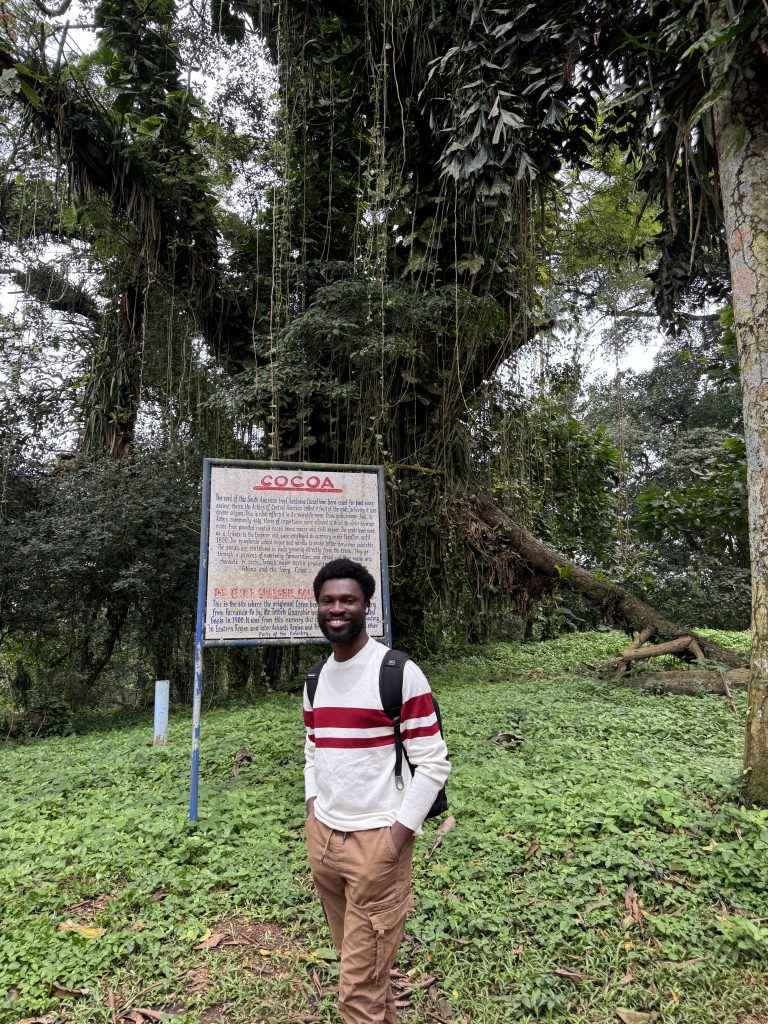
Photo (right): Researching our relationship with nature sometimes begins by simply being in it.
Can you describe a “eureka moment” you might have had during your PhD?
A key eureka moment during my PhD was the gradual realisation that research competence, confidence, and theoretical understanding are not pre-existing capabilities, but develop through iterative engagement with the field. Early in my PhD, I approached interviewing, presenting, and engaging with academic feedback as tasks that required a level of skill I either had or did not yet have, which made early difficulties feel like signs of inadequacy. However, through repeated experience across fieldwork, presentations, and academic discussions, I began to see these challenges differently. Rather than indicating lack of ability, they reflected the natural process through which methodological and analytical capacities are built over time. This shifted my understanding of the PhD from a test of prior competence to a process of becoming, where insight and capability emerge progressively through practice, feedback, and reflection.
What side projects, communities, or other initiatives are you involved with?
During my PhD, I was part of the NERC-funded RENEW Biodiversity project, an interdisciplinary initiative bringing together engineers, economists, geographers, and social scientists to address biodiversity and nature-related challenges. Within this project, I contributed to the development of a biodiversity and nature platform designed to support business decision-making. This experience enabled me to engage with both academic and practitioner communities working at the intersection of biodiversity science and organisational practice, and strengthened my understanding of how interdisciplinary research can be translated into applied tools.
In addition, I supported the teaching of management courses at the Business School, contributing to course delivery and student learning in management-related subjects. I also participated in the Business School’s EQUIS re-accreditation process, contributing to the student engagement report, which was recognised with a Dean’s Commendation.
Beyond the university, I was invited as a guest mentor for a creative arts project at Falmouth University exploring the relationship between people and nature. This work contributed to a filmed production that was later broadcast, providing an opportunity to engage with interdisciplinary perspectives on nature, creativity, and human–environment relationships in a non-academic context.
What three tips would you offer to new PhD students in your field?
Three key tips I would offer to new PhD students are:
- First, recognise that key academic skills develop over time rather than being present from the outset. Early in my PhD, I struggled with interviewing, presenting, and engaging with theory, but these gradually improved through repeated practice, feedback, and experience. Progress in a PhD is incremental, and early difficulties are a normal part of the learning process.
- Second, avoid comparing your early-stage work with the polished outputs of others. What often appears as effortless competence is the result of extensive unseen iteration, feedback, and revision. Maintaining focus on one’s own development trajectory is essential for sustaining confidence and progress.
- Third, embrace the iterative and slow nature of doctoral research. Meaningful academic work is developed through cycles of practice, reflection, and refinement. Learning to be patient with this process is crucial for sustaining motivation and producing rigorous research.
What hobbies or interests do you enjoy outside of work?
Outside of work, I enjoy spending time in nature through walking and photography. These walks have become an important personal routine, and I often take photographs of biodiversity and natural environments that I later use in my research presentations. Over time, this has also helped me develop my photography skills in an informal but meaningful way.
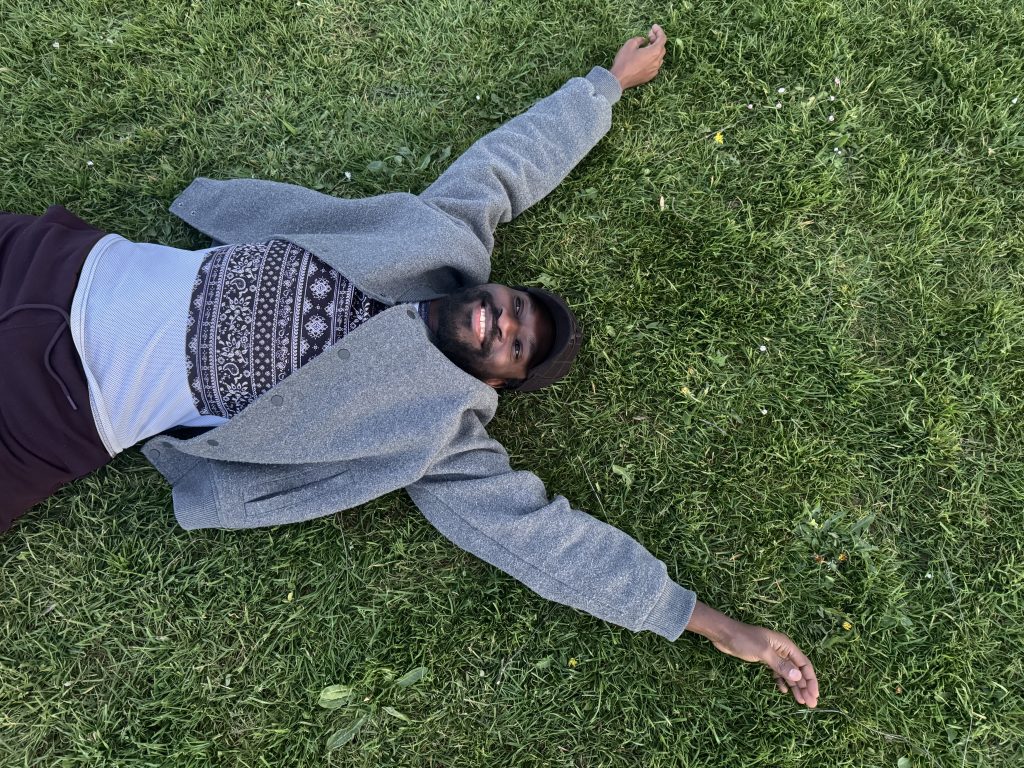
During some of these walks, I spend time in green spaces pausing to reflect on my PhD journey, often sitting or lying on the grass as a way of stepping back from day-to-day academic demands. These moments help me reflect on my progress, maintain perspective, and stay grounded throughout the PhD process.
I also enjoy journaling as a way of processing my experiences, writing about what is progressing well, what challenges I face, and how to distinguish between what is within and beyond my control. This practice helps me structure my thinking and maintain balance.
Photo (left): Unwinding in nature.
In one or two sentences, what does the GRONEN community mean to you? Or the community of sustainability management scholars more broadly if you are new to GRONEN.
Although I am relatively new to GRONEN and have yet to attend my first conference, I have already felt a strong intellectual affinity with the sustainability management scholarly community through my research journey. I have benefited from the generosity of scholars in the field who have taken time to engage with my work, provide detailed feedback, and support my development, which has made me value the openness and collaborative spirit of this academic community.
What’s next for you?
Next, I will be joining the Stockholm School of Economics as a postdoctoral research fellow, where I aim to further develop my current research programme and work towards positioning its different outputs within appropriate academic outlets. I also look forward to engaging with the school’s supportive and collegial environment to develop a new research agenda focused on how different actors within complex supply chains engage with biodiversity and nature-related challenges.
Contact
You can contact Patrick by email or connect on LinkedIn.

Karelia Dagnaud is a doctoral candidate at the Aalto University School of Business, in Finland. In her research, she explores how researchers and business practitioners learn and organize for sustainability, specifically in the textile sector context.