Sophie Bornhöft is a PhD candidate in Sustainable Finance and Sustainability Accounting at the Institute of Management, Accounting and Finance at Leuphana University Lüneburg in Germany. Her research focuses on the measurement of corporate environmental performance and environmental risk, and how these factors are reflected in market valuation.
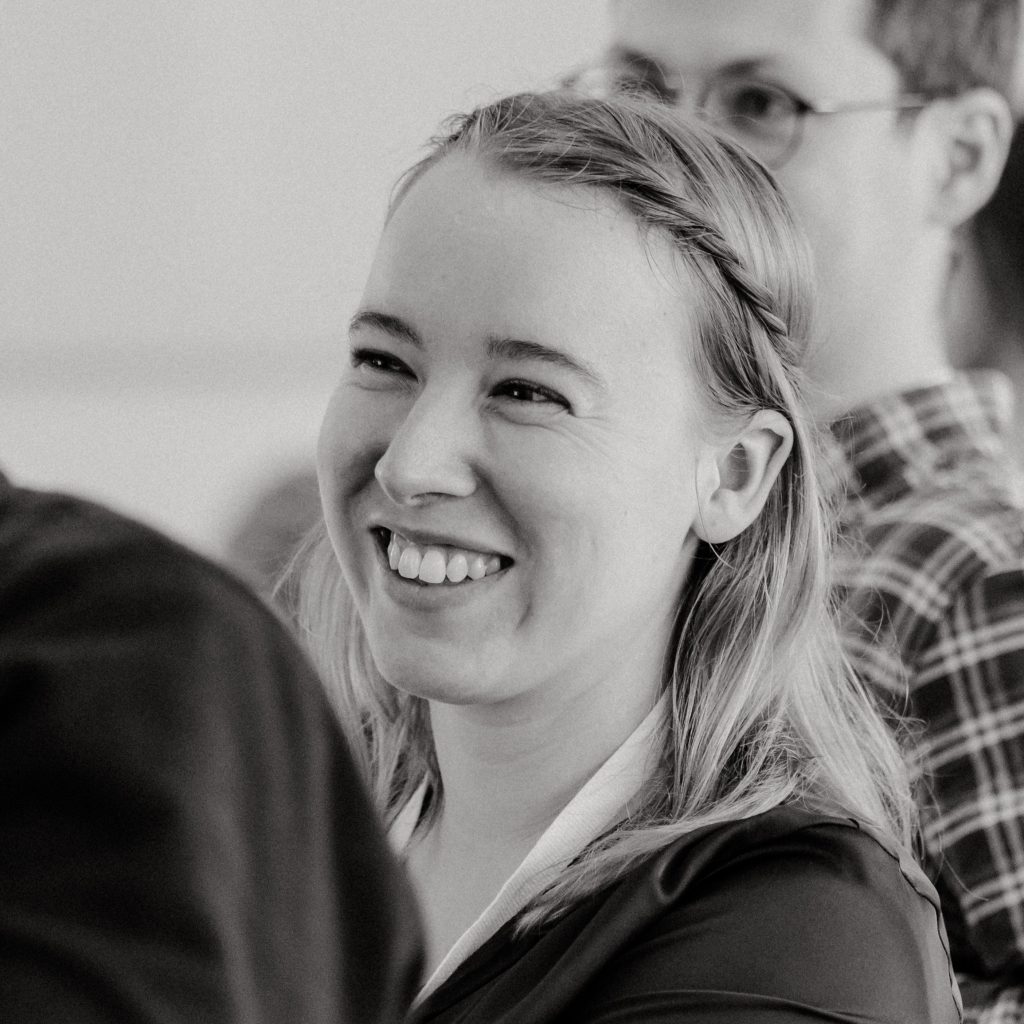
Photo (right): Sophie at the GRONEN 2024 conference in Paris.
Here is Sophie’s story.
What are the top three highlights, professional skills, or other experiences you have had during your time as a PhD student?
One of the highlights of my PhD has been the opportunity to conduct two research visits. In 2025, I visited the Faculty of Economics and Business at the University of Groningen and the School of Accounting and Finance at the University of Bristol. In Groningen, I was kindly hosted by Katrin Heucher, whom I first met through a GRONEN teaching event. The visits were valuable from many perspectives. I received feedback on my work, gained inspiration for new research ideas, developed a clearer understanding of the academic job market and established connections for research collaborations. Overall, the visits gave me a better understanding of what working at different institutions can look like. And of course, Groningen and Bristol are both lovely places to live in and visit, and I am grateful for the friendships that developed during the visits.
More generally, one aspect I have particularly valued during my PhD has been the opportunity to get to know so many curious and engaged people and to meet them again throughout the years. Whether at conferences, seminars, or outside academic events and institutions, I always enjoy seeing familiar faces and catching up on personal and professional developments.
Finally, I greatly enjoyed and learned from developing and teaching my own undergraduate seminar on (sustainable) business models. I developed a good understanding of how to design engaging seminars and how to combine classic textbook knowledge with recent research publications and practical business examples. Also, I very much enjoyed working with the students and was impressed by how passionate the students were about sustainability, as well as by the quality of their work. This experience strengthened my wish to work in a position in which I am actively involved in teaching or training.
What inspired you to pursue a PhD?
I first began to consider pursuing a PhD during my undergraduate studies. At that time, the idea was mainly driven by the thought that I would like to teach at a university or a university of applied sciences one day. I was fortunate to be taught by lecturers and professors who were passionate about their subjects and shared that enthusiasm with their students. This sparked my wish to pursue a career that would also allow me to motivate and inspire others through teaching. During my master’s studies, my motivation evolved. My aspiration shifted from being primarily teaching-driven to developing greater interest in research. I realised that academic research would allow me to connect my academic background in accounting and finance with the topic that has been close to my heart for many years, namely sustainability. Pursuing a PhD, and working as a research associate alongside it, therefore felt like the ideal way to combine both elements: conducting research on topics I care about, while also contributing to the education and development of the next generation of students.
How would you summarize your research project(s) in a short title?
Measurement and market valuation implications of corporate environmental performance and corporate environmental risk: An empirical and conceptual examination.
In brief, what is the empirical method/context you are adopting in your thesis?
My focus is on quantitative research, complemented by conceptual work. Most of my thesis-related papers are situated in a capital market setting and rely mainly on event study methodology. However, my final thesis paper takes a more conceptual perspective. It examines the design of environmental performance metrics from a natural sciences standpoint and contrasts these with the metrics currently employed in business research. Part of this study is based on a structured literature review.
Can you describe a “eureka moment” you might have had during your PhD?
Perhaps not a classic “eureka moment”, but certainly an important realisation for me was that many opportunities in academia arise through being proactive and building connections. Earlier in my PhD, I was sometimes hesitant to approach more senior scholars, assuming they might be too busy or distant to engage with a doctoral researcher. Over time, I realised, not entirely surprisingly, that this is rarely the case. Many scholars are remarkably supportive and genuinely interested in discussing ideas. For me, reaching out to scholars and building connections has resulted in valuable feedback on my work, collaborations, research visits, guidance on the job market, and opportunities to co-organise events and conference sessions.
What three tips would you offer to new PhD students in your field?
- Choose a topic you genuinely care about: Invest time at the beginning of your PhD in identifying a research area that truly interests you. Working on a topic you are passionate about helps sustain motivation in the more demanding phases of the PhD.
- Acknowledge that each phase of the PhD has its own pace and that the process can feel like a rollercoaster: In my experience, each phase of a PhD has its own rhythm. Some stages can feel as though they last forever, while at other times progress happens more quickly than expected. At the same time, celebrating achievements such as conference acceptances or paper publications is just as much a part of the PhD experience as dealing with paper rejections.
- Do not wait for perfect clarity before starting: This may sound counterintuitive considering my first tip, but while I believe it is important to invest time in developing research ideas and reviewing the literature thoroughly, I would recommend not remaining in the planning stages for too long. In my experience, starting to write, even when my ideas still feel incomplete, often brings structure and clarity that I would not reach through thinking alone.

What hobbies or interests do you enjoy outside of work?
One of my favourite ways to unwind is attending yoga classes. In addition, I enjoy other kinds of sports and spending time outdoors. Hamburg, the city in which I live, may not have mountains but offers beautiful walking and cycling routes along the water and through its forests and moorlands. I also greatly value good food and enjoy trying new restaurants as well as cooking at home. Most of all, I enjoy sharing these activities with my family and friends.
In one or two sentences, what does the GRONEN community mean to you? Or the community of sustainability management scholars more broadly if you are new to GRONEN.
For me, the GRONEN network represents a community of extraordinarily supportive, open-minded and inspiring scholars, who are united by the commitment to creating positive impact through research, teaching, and/or engagement beyond academia.
What’s next for you?
I am currently in the final stages of completing my thesis. As a present to myself for finishing the PhD, I plan to enrol in a yoga teacher training. Depending on how it fits with conference plans and my thesis defence, I hope to do this over the summer.
Contact
You can connect with Sophie on Linkedin.

Karelia Dagnaud is a doctoral candidate at the Aalto University School of Business, in Finland. In her research, she explores how researchers and business practitioners learn and organize for sustainability, specifically in the textile sector context.